
WELCOME PACK BONUS
OF 400% UP TO €3200
+ 200 FREE SPINS
OF 400% UP TO €3200
+ 200 FREE SPINS
Home → Blackjack
Blackjack at Lemon Casino: Variants, Rules and Payouts
Side Bets don't count towards bonus turnover
Side bets such as Any Pair, 21+3, Hot 3, and Bust It, available on Infinite Blackjack, do not contribute to bonus wagering requirements. For example, wagering on these side bets will not reduce the 300% welcome bonus wagering requirement. This means funds wagered on these additional bets will not count towards the total turnover needed to unlock bonus winnings.
These side bets, offered on Infinite Blackjack by Evolution, include options like Any Pair and 21+3. While they add an extra layer of excitement to the game, their exclusion from bonus turnover calculations is a key detail for players aiming to meet wagering requirements. Therefore, focusing on the main game is essential for bonus progression.
Players should be aware that only the main Blackjack hand wagers on tables like Infinite Blackjack contribute to the wagering of the €2,000 welcome bonus. Bets placed on side options, even with RTPs as low as 92.53% for Blackjack Insurance, will not count. This effectively means a larger portion of funds must be wagered on the core game.
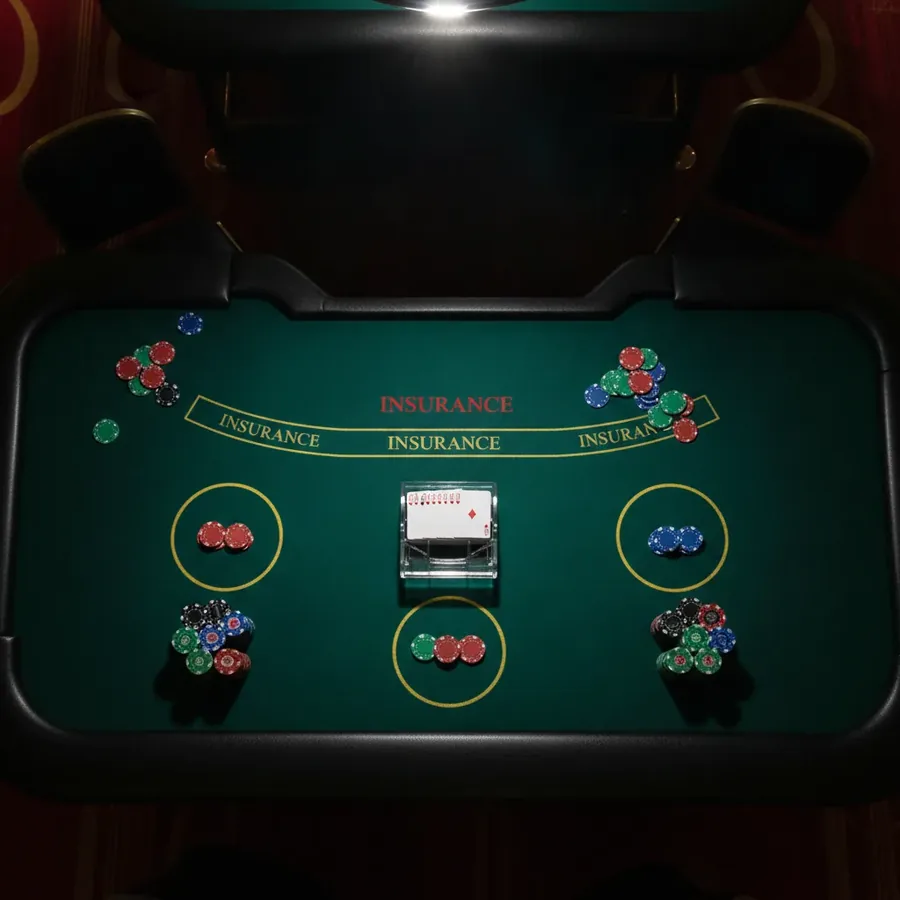
Double Down after Split: which tables allow it
The Double Down after Split (DAS) rule is a beneficial modification for Blackjack players, and its availability varies across different tables. On Blackjack 6 Decks, DAS is permitted, alongside Splitting and Doubling on any two cards, contributing to its 99.54% RTP. This rule allows players to double their bet after splitting a pair.
Another table offering the advantageous DAS rule is Blackjack Liberal Vegas Strip, which also features Split, Resplit, and Late Surrender, contributing to its 99.72% RTP. The inclusion of DAS on this table, alongside other liberal rules, creates a more favourable playing environment. These rules collectively reduce the house edge.
The rule modifier for Double After Split (DAS) positively impacts the RTP by approximately 0.14 percentage points. While not all variations explicitly state DAS, tables like Blackjack 6 Decks and Blackjack Liberal Vegas Strip are noted to permit it. This means players can strategically double their bet after a split on these specific games.
Ignored Basic Strategy Chart: 1 Percent Wasted
Adhering to basic strategy is crucial for optimal play in Blackjack, and deviations can significantly increase the house edge. For Blackjack 6 Decks with a 99.54% RTP, ignoring basic strategy can lead to a substantial increase in the house advantage, potentially costing players 1% or more in expected returns. This figure represents a significant portion of the game's inherent edge.
When basic strategy is not followed, particularly on variants like Blackjack 6 Decks, the house advantage can rise significantly. For instance, the standard house advantage of 0.46% for Blackjack 6 Decks can easily be negated by poor decisions, effectively wasting potential winnings. This highlights the importance of understanding and applying correct strategy.
The concept of a 1% 'wasted' amount due to not using basic strategy is particularly relevant when considering the low house edge of some Blackjack variants. Blackjack Ein Deck, for example, boasts a 0.15% house advantage, meaning any deviation from optimal play can more than double or triple the casino's expected profit from that hand.
Blackjack Contributes Only 10 Percent to Wagering
Players aiming to fulfil the wagering requirements for the 300% welcome bonus up to €2,000 will find that Blackjack games contribute only 10 percent. This means that for every €100 wagered on Blackjack, only €10 will count towards the total turnover requirement. This significantly impacts how quickly players can clear the bonus funds.
The contribution rate for Blackjack is set at 10%, a standard figure for many online casinos, meaning that to wager the full €2,000 bonus amount, a player would need to stake €20,000 on Blackjack tables. This contrasts sharply with Slots, which contribute 100% to the wagering requirement, making them a faster route for bonus clearance.
Given the 10% contribution of Blackjack to the wagering requirement, players should plan their gameplay accordingly. For example, to meet the turnover for a €2,000 bonus, a total of €20,000 in wagers would be necessary if only playing Blackjack. This necessitates a larger bankroll and potentially more time spent playing.
Step-by-step Split at the Live Table
At live Blackjack tables, the splitting process involves a clear sequence of actions to manage multiple hands. When a player splits a pair, they receive an additional card for each of the initial two cards, effectively creating two separate hands. For instance, on Infinite Blackjack, a player can split their cards and then play each hand independently.
The rules governing splitting at live tables, such as those found on Infinite Blackjack, typically allow for splitting up to four hands. Following a split, a player can often double down on each of the new hands, provided the rules permit it. This expands the player's options and potential betting opportunities on the table.
The ability to resplit Aces is often a specific rule that can affect gameplay at live tables. While Blackjack 6 Decks allows for splitting, the specific rules regarding resplitting Aces may vary. This detail is important for players who frequently split Aces, as it can influence their strategic decisions and the overall RTP.
Blackjack variants at a glance
| Variant | Payout | House edge | Rule | Bet range |
|---|---|---|---|---|
| Blackjack Ein Deck, klassische Regeln, 3:2 | 99.85% | 0.15% | Weniger Decks = niedrigerer Vorteil; ein Deck gibt ca. −0.48 Prozentpunkte gegenüber 8 Decks. Oft durch 6:5 Auszahlung kompensiert. | Blackjack 3:2, Gewinn 1:1 |
| Blackjack Insurance / Versicherung (6–8 Decks) | 92.53% | 7.47% | Separate Nebenwette bis 50% der Hauptwette, wenn der Dealer ein Ass hat. Basisstrategie schreibt IMMER Ablehnung vor (außer Karten zählen bei True Count ≥ +3). Bei einem Deck Vorteil ≈ 5.88% | Insurance 2:1 |
| Blackjack 6 Decks, S17, DAS, DOA, Auszahlung 3:2, Basisstrategie | 99.54% | 0.46% | Dealer steht auf Soft 17; Verdopplung auf jeder Zweierkarte; Verdopplung nach Split erlaubt; keine Aufgabe. Basisstrategie ist für diesen Wert zwingend | Blackjack 3:2, normaler Gewinn 1:1, Insurance 2:1 |
| Blackjack Liberal Vegas Strip (liberale Regeln, 3:2) | 99.72% | 0.28% | Günstigste Regelkombination: S17 + DAS + Resplit + Late Surrender. Standardabweichung 1,15 | Blackjack 3:2, Gewinn 1:1 |
| Blackjack Split / Double / H17 – Regel-Effekte | n.a. (Regel-Modifikatoren) | H17 +0.22 Prozentpunkte; RSA −0.08 Prozentpunkte; DAS −0.14 Prozentpunkte | Dealer Hits Soft 17 verschlechtert RTP um 0.22 Prozentpunkte; Resplit Aces verbessert um 0.08 Prozentpunkte; Double After Split verbessert um ca. 0.14 Prozentpunkte; 6 Decks statt 8 – ca. 0.02 Prozentpunkte. | Double – Einsatz ×2 mit einer Karte; Split – bis 4 Hände; Ass-Split meist mit einer Karte. |
| Blackjack Auszahlung 6:5 statt 3:2 (6 Decks) | 98.15% | 1.85% | Ersatz von 3:2 durch 6:5 fügt exakt +1.39 Prozentpunkte zum Vorteil des Casinos hinzu – stärker als jede andere Regeländerung. Bei $10 Einsatz zahlt Blackjack $12 statt $15. | Blackjack 6:5, Gewinn 1:1 |
Which rule variants does the software show?
Blackjack Liberal Vegas Strip offers a player-favourable RTP of 99.72%, with a house edge of just 0.28%. This variant features favourable rules such as Standing on Soft 17 (S17), Double After Split (DAS), and the option for Late Surrender. The standard deviation for this game is 1.15, indicating a relatively low variance for players.
Blackjack Split/Double/H17 includes rule modifiers that affect the RTP and house edge, such as Double After Split improving RTP by approximately 0.14 percentage points. The game allows players to split hands up to four times and double down on their first two cards, offering strategic flexibility. The rules for hitting a soft 17 can negatively impact RTP by 0.22 percentage points.
A significant rule change to consider is the payout for a Blackjack, with a 6:5 payout increasing the casino's advantage by 1.39 percentage points compared to the standard 3:2. For instance, a 10 EUR bet on a Blackjack would yield 12 EUR instead of 15 EUR. This alteration significantly impacts the long-term return for players across all decks, including standard 6-deck games.
What Peek Means with a Dealer Ace
When a dealer shows an Ace, the option for Blackjack Insurance becomes available as a side bet, typically up to 50% of the main bet. This insurance bet has a notably high house edge of 7.47% in 6-8 deck games, with an RTP of only 92.53%. Standard strategy dictates rejecting this bet unless card counting indicates a true count of +3 or higher.
The 'Peek' in Blackjack refers to the dealer checking for a Blackjack when their upcard is an Ace or a ten-value card. This action is crucial for players considering the Late Surrender option, as it occurs after the dealer checks for Blackjack. Surrendering after this check allows the player to forfeit half their bet on a losing hand.
Blackjack Surrender, specifically Late Surrender, allows a player to give up their hand after the dealer checks for Blackjack, forfeiting half of their stake. This rule can improve the RTP by approximately 0.08 percentage points. Early Surrender, while much rarer, offers a considerably greater RTP improvement of up to 0.6 percentage points.
Why Loss Progression Quickly Reaches Table Limit
The consequence of a progressive betting strategy, especially one that increases stakes after losses, is the rapid approach to the table limit. For example, if a player starts with a 5 EUR bet and experiences a series of losses, doubling the bet each time, the stake can quickly escalate beyond affordable levels. This rapid increase is inherent to the nature of such progressions.
Consider a scenario where a player employs a doubling strategy after each loss. A starting bet of 5 EUR could reach 10 EUR, then 20 EUR, 40 EUR, and so on. Within a few consecutive losing hands, the required bet can exceed reasonable limits, especially at tables with maximum bet restrictions. This progression highlights the risk involved.
The impact of loss progression is amplified by the table limits themselves. If a table has a maximum bet of, for example, 500 EUR, a player employing a doubling strategy after initial losses could reach this limit in just a few steps. A starting bet of 5 EUR would hit 320 EUR on the eighth progression, with the next bet exceeding the 500 EUR cap.
Chose Wrong Table for 5 EUR Bankroll
A player with a limited bankroll of 5 EUR would find many tables unsuitable due to minimum bet requirements. For instance, Blackjack Insurance, with an RTP of 92.53%, can be bet up to 50% of the main bet, but the initial bet itself must be feasible. Many standard Blackjack variants often have minimum bets higher than 5 EUR.
To play Blackjack with a 5 EUR bankroll, a player must seek out tables with very low minimum wagers. This allows for a greater number of hands played within the limited budget.
For a 5 EUR bankroll, playing tables with a low starting bet is essential. For example, Infinite Blackjack, also by Evolution, allows bets from 1 EUR up to 5,000 EUR, making it a suitable choice. This ensures that a player can sustain gameplay for a reasonable duration without immediately exceeding their budget on a single hand.
Live Table vs RNG Table: Speed and Limits
Live dealer games, such as Infinite Blackjack from Evolution, offer higher betting limits, allowing players to wager from 1 EUR up to 5,000 EUR. These tables provide a more social atmosphere with potentially unlimited seats, accommodating a broad range of players. The presence of live dealers and multiple players can influence the pace of the game.
In contrast, RNG (Random Number Generator) tables can offer more flexibility in terms of speed and betting. For example, Blackjack Split/Double/H17 variants allow for quick decisions without waiting for other players.
The speed of play differs significantly between live and RNG tables. Live games like Blackjack Party feature hosts and can be more leisurely, while RNG versions typically allow for quicker actions. For example, a player with a 5 EUR bankroll might prefer an RNG table with a 1 EUR minimum bet to maximize playtime, compared to a live table with a higher minimum.
Register Late Surrender correctly in three steps
Late Surrender is a rule option in Blackjack. This option allows a player to forfeit their hand after the dealer checks for Blackjack. The player loses half of their wager in this scenario.
This rule modification improves the Return to Player (RTP) by approximately 0.08 percentage points. While Early Surrender offers more significant benefits, it is considerably rarer in practice. The wager is halved upon surrender.
This function is available on certain Blackjack tables. For instance, Blackjack Liberal Vegas Strip includes Late Surrender as a favorable rule. The house edge for this variant is a low 0.28%.
16 vs 10 played incorrectly: most common error
A common player error involves playing a hand of 16 against a dealer's 10 card. This specific scenario impacts the game's mathematics significantly. Incorrect play here leads to a higher house edge.
The RTP for Blackjack variants can be affected by specific rules. For example, Blackjack Insurance (6-8 decks) has a house edge of 7.47% when played suboptimally. Basic strategy dictates always rejecting this side bet.
The difference between optimal and suboptimal play can be substantial. For example, a Blackjack payout of 6:5 instead of 3:2 increases the house edge by 1.39 percentage points. At a $10 bet, this means a $12 payout instead of $15.
Splitting costs double bet: plan budget
Splitting pairs in Blackjack can effectively double the initial bet. This occurs when a player chooses to divide a starting hand of two cards of the same rank into two separate hands. Each new hand requires an additional wager equal to the original bet.
This action impacts bankroll management directly. For example, if a player splits two Aces and then doubles down on each, their total bet could escalate rapidly. The rules for Double After Split (DAS) allow this maneuver.
Consider the bet limits when planning. Live tables like Infinite Blackjack allow bets from 1 EUR up to 5,000 EUR. A split followed by a double could quickly reach significant stakes, requiring careful budget allocation.
Even Money only possible with Dealer Ace
The 'Even Money' option in Blackjack is a specific player choice related to the dealer's upcard. This option is typically offered when the player has a Blackjack and the dealer's upcard is an Ace.
Taking Even Money pays out at 1:1, regardless of whether the dealer subsequently achieves Blackjack. This is distinct from the standard 3:2 payout for a natural Blackjack when the dealer does not have an Ace showing.
This contrasts with the Blackjack Insurance side bet, which is offered when the dealer shows an Ace. Insurance pays 2:1 if the dealer has Blackjack, but it carries a high house edge of 7.47% on average.
Four hours of play with 300 EUR bankroll
Playing Blackjack for four hours with a 300 EUR bankroll requires careful stake management. The average house edge in Blackjack can vary significantly based on the rules. For instance, Blackjack 6:5 payouts increase the house edge to 1.85%.
With a 300 EUR bankroll, setting a per-hand bet is crucial. If betting 5 EUR per hand, approximately 60 hands can be played per hour (300 EUR / 5 EUR = 60 hands). This assumes no significant losses or wins.
The welcome bonus offers 300% up to €2,000 plus 100 free spins. While slots contribute 100% to wagering, table games like Blackjack contribute only 10%. This means bonus funds take considerably longer to clear when playing Blackjack.
Contact
Live - online chat
Banking









Providers












lemon casino 2025