
WELCOME PACK BONUS
OF 400% UP TO €3200
+ 200 FREE SPINS
OF 400% UP TO €3200
+ 200 FREE SPINS
Home → Roulette
Roulette at Lemon Casino
Only 10 Percent Contribution: What are the Consequences?
Table games contribute exactly 10 percent toward the wagering requirement for the 300% welcome bonus up to 2,000 EUR plus 100 free spins. This low contribution rate means players must deposit and bet significantly more money than with slot games to clear the bonus funds effectively. Consequently, the total turnover required becomes much higher because only a fraction of each wager counts toward the target.
Roulette variants like French Roulette with an RTP of 97.30% fall under this table game category with the same 10 percent contribution rule. The house edge of 2.70% on European wheels further reduces the expected value of every spin when combined with the low contribution percentage. Players should calculate their potential loss carefully before attempting to meet the bonus terms using these specific roulette tables.
The Five Number Bet in American Roulette carries a steep 7.89% house edge and also contributes only 10 percent to the wagering requirement. This combination makes it one of the most expensive ways to clear bonus funds due to the high statistical disadvantage and low credit rate. Using this specific bet is generally discouraged for bonus hunters seeking efficient turnover completion.
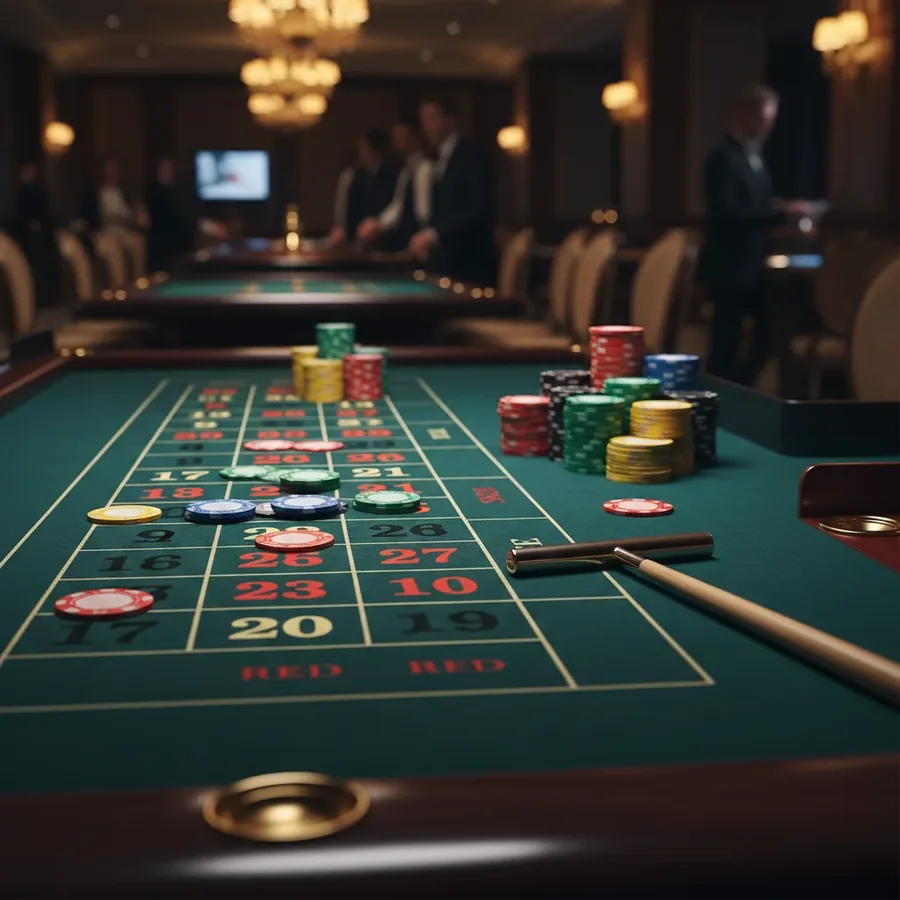
Quantum Roulette: Which Numbers Get Multipliers
Quantum Roulette by Playtech features Quantum Multipliers that can reach up to 500x on randomly selected numbers between one and five. These multipliers apply directly to straight bets placed on those specific numbers, potentially turning a standard 35:1 payout into a massive win. The base game uses a standard European wheel with 37 sectors and maintains an RTP of 97.30% for regular outcomes.
Mega Roulette from Pragmatic Play Live introduces up to five Mega Numbers per round, each carrying multipliers ranging from 50x to 500x. A direct bet on a numbered spot pays 29:1 normally, but if a multiplier hits that number, the payout increases significantly based on the active multiplier value. This variant also operates on a 37-sector European wheel with an RTP of 97.30%.
Blaze Roulette by Authentic Gaming does not feature random multipliers but instead offers a live host experience with bets ranging from 0.20 to 5,000 EUR. The maximum payout remains capped at 35:1 for all winning bets on the European wheel with 37 sectors. This version provides a traditional live dealer environment without the added volatility of quantum-style multiplier mechanics.
Error: 10 Percent Contribution to Wagering Missed
Players often misunderstand that table games like Roulette contribute only 10 percent to the wagering requirement for the 300% welcome bonus up to 2,000 EUR. If a player bets 100 EUR on French Roulette with a 2.70% house edge, only 10 EUR counts toward the bonus clearance. This discrepancy frequently leads to unexpected failures when attempting to withdraw bonus funds after meeting perceived requirements.
The Straight bet in European Roulette pays 35:1 but still adheres to the strict 10 percent contribution rule for bonus wagering fulfillment. Even though the payout ratio is high, the regulatory contribution limit remains fixed regardless of the bet type or outcome on the 37-sector wheel. Players must track their actual credited amount separately from their total wagered volume to avoid confusion.
American Roulette with its 38 sectors and 5.26% house edge presents an even greater challenge for clearing the 2,000 EUR bonus due to the lower contribution rate. Betting on the Five Number Bet with a 7.89% house edge accelerates fund depletion while contributing minimally to the required turnover. Understanding these mechanics prevents wasted effort on unfavorable games for bonus clearance.
D'Alembert and Fibonacci Against the Same Table Limit
Quantum Roulette allows bets from 0.10 EUR to 5,000 EUR, providing a wide range for progressive betting systems like D'Alembert or Fibonacci strategies. Players can adjust their stake sizes within this limit to manage risk while applying mathematical progression models to the 37-sector European wheel. The presence of multipliers adds variance that may disrupt standard system expectations despite the consistent base RTP of 97.30%.
Blaze Roulette sets a minimum bet of 0.20 EUR and a maximum of 5,000 EUR, offering similar flexibility for implementing Fibonacci sequence wagers. The live dealer format runs from 19:00 to 01:00 CEST, ensuring availability during peak hours for players testing these strategies. Since payouts remain capped at 35:1, the mathematical expectation aligns with standard European Roulette rules without additional multiplier interference.
Mega Roulette restricts stakes to between 0.20 EUR and 2,000 EUR, which limits the maximum exposure for aggressive betting systems compared to other tables. The inclusion of up to five Mega Numbers with multipliers up to 500x creates unpredictable swings that can rapidly escalate or reduce bankrolls. Players using D'Alembert must account for these volatile multiplier events when calculating their long-term strategy effectiveness.
Error: Using Opposite Bets for Wagering Fulfillment
Betting on both Red/Black and Black/Red simultaneously in European Roulette yields no profit due to the 2.70% house edge on the single zero sector. Each 1:1 payout bet loses value over time because the zero pocket causes half of all losing rounds to result in a full loss rather than a push. This strategy fails to generate positive expected value while consuming the bonus funds at an accelerated rate against the 10% contribution rule.
French Roulette offers La Partage on even-money bets, returning 50% of the stake when zero appears, which slightly mitigates losses on opposite betting strategies. However, this rule applies only to outside bets, leaving inside bets like Straight wagers at 35:1 with no partial refund mechanism available. The 98.65% RTP for even-money bets contrasts sharply with the lower returns on other wager types.
American Roulette lacks any La Partage or En Prison rules, meaning the 5.26% house edge applies fully to all bets including opposite wagers. The double zero pocket increases the probability of loss for even-money bets compared to European versions, making opposite betting even less viable. Combined with the 10% table game contribution, this approach rapidly depletes bonus balances without achieving meaningful wagering progress.
Roulette bet types at a glance
| Bet | Payout | Win Chance | Numbers Covered | House Edge |
|---|---|---|---|---|
| Roulette Amerikanisch (doppelte Null, 38 Sektoren) | Straight 35:1, Split 17:1, Street 11:1, Corner 8:1, Six Line 5:1, Dozen 2:1, Column 2:1, Rot/Schwarz 1:1 | 94.74% | 38 Sektoren (1–36 + 0 + 00); Auszahlungen wie beim europäischen Rad, aber der zusätzliche Sektor verdoppelt den Hausvorteil | 5.26% |
| Roulette Amerikanisch – Five Number Bet (0, 00, 1, 2, 3) | Five Number 6:1 (deckt 5 von 38 Sektoren) | 92.11% | Einzige Wette am amerikanischen Rad mit Edge über 5,26% – „Fallenwette“. Kein Äquivalent am europäischen Rad | 7.89% |
| Roulette Europäisch (einfache Null, 37 Sektoren) | Straight 35:1, Split 17:1, Street 11:1, Corner 8:1, Six Line 5:1, Dozen 2:1, Column 2:1, Rot/Schwarz 1:1, Odd/Even 1:1, 1-18/19-36 1:1 | 97.30% | 37 Sektoren (1–36 + 0); Auszahlungen wie für 36 Sektoren – daher konstanter Edge auf ALLE Wetten | 2.70% |
| Roulette Französisch mit La Partage (gerade Chancen) | Rot/Schwarz 1:1 (bei 0 Rückerstattung 50%), Odd/Even 1:1, Low/High 1:1; Innere Einsätze ohne La Partage: Straight 35:1, Split 17:1, Street 11:1, Corner 8:1 | 98.65% | Bei 0 wird die Hälfte des Einsatzes auf gerade Chancen zurückerstattet (Rot/Schwarz, Pair/Impair, Manque/Passe). En Prison gibt denselben 1,35%. Regel gilt NUR für gleiche Einsätze | 1.35% |
| Roulette Französisch, innere Einsätze (La Partage gilt nicht) | Straight 35:1, Split 17:1, Street 11:1, Corner 8:1, Six Line 5:1, Dozen 2:1, Column 2:1 | 97.30% | Rad gleich (37 Sektoren), aber La Partage/En Prison gilt nicht für innere Einsätze – Edge bleibt europäisch | 2.70% |
Small Budget: Why Straight 35:1 Empties Quickly
Straight bets on Roulette Französisch with La Partage offer a payout of 35:1 for inner wagers, yet the house edge remains at 1.35% only on even-money outside bets. The 98.65% RTP applies strictly to Red/Black or Odd/Even choices where half the stake returns on zero. Inner slots like Split pay 17:1 but lack this protection, exposing the player to the standard European risk profile on those specific numbers.
The Straight 35:1 payout appears lucrative, but the 5.26% house edge on American Roulette drastically reduces bankroll longevity compared to the French variant. While the American wheel offers the same 35:1 return for a single number hit, the presence of the double zero sector increases the probability of loss significantly. Players betting small amounts will deplete funds faster here due to the higher statistical disadvantage inherent in the 38-sector layout versus the 37-sector European wheel.
Bonus wagering requirements further accelerate bankroll depletion because table games contribute only 10% toward the 300% welcome bonus up to €2,000 turnover target. This low contribution rate means that every euro wagered on roulette generates minimal progress toward unlocking free spins or bonus funds. Consequently, players must bet ten times more volume than slot players to meet the same turnover conditions, increasing exposure to the house edge.
European or American: Which Wheel Pays Better
European Roulette features a 37-sector wheel with a single zero, resulting in a consistent 2.70% house edge across all bet types including Straight and Dozen wagers. The Straight bet pays 35:1 while the Corner bet returns 8:1, maintaining mathematical symmetry regardless of the selection. This consistency allows players to apply identical risk management strategies whether choosing high-risk inner numbers or safer outer columns.
In contrast, American Roulette utilizes a 38-sector wheel containing both a single zero and a double zero, which doubles the house edge to 5.26% for standard bets. Although the payout structure remains identical with Straight bets returning 35:1 and Columns paying 2:1, the additional losing sector significantly impacts long-term retention. The Five Number Bet covering 0, 00, 1, 2, and 3 carries an even worse 7.89% edge, making it the most unfavorable option on the floor.
Quantum Roulette Live by Playtech and Blaze Roulette by Authentic Gaming both utilize the superior European 37-sector wheel with a 97.30% RTP. These live dealer options maintain the lower 2.70% house advantage found in standard European tables, offering better value than their American counterparts. Mega Roulette by Pragmatic Play Live also adheres to this standard, ensuring that multipliers do not alter the fundamental mathematical expectation of the base game.
The French variant with La Partage offers the best value for even-money bets, reducing the house edge to just 1.35% when zero hits. This rule refunds half the stake on Red/Black or Odd/Even wagers, effectively halving the casino's advantage on these specific outcomes. However, this benefit disappears for inner bets like Street or Split, which revert to the standard 2.70% edge despite using the same physical wheel configuration.
Which Bets are Excluded from Bonus Wager?
All roulette variants at Lemon Casino contribute exactly 10% toward the wagering requirement for the 300% welcome bonus up to €2,000 plus 100 free spins. This uniform contribution rate applies equally to straight bets paying 35:1 and column bets paying 2:1 across European, American, and French wheels. Players must therefore place significantly higher total volumes on these tables compared to slot games to fulfill the turnover obligations attached to the deposit match.
The Five Number Bet on American Roulette, covering 0, 00, 1, 2, and 3, is subject to the same 10% contribution limit as other roulette wagers. Despite its exceptionally poor 7.89% house edge and 92.11% RTP, this bet type does not receive any special exclusion or reduced weighting status. It counts fully within the allowed gaming mix, though its negative expectation makes it a mathematically inefficient choice for clearing bonus funds efficiently.
Live dealer tables such as Quantum Roulette Live and Blaze Roulette operate under the identical 10% contribution rule despite featuring higher betting limits. Quantum Roulette accepts stakes from 0.10 to 5,000 EUR, while Blaze Roulette ranges from 0.20 to 5,000 EUR, yet neither accelerates bonus clearance. Mega Roulette by Pragmatic Play Live restricts maximum bets to 2,000 EUR but maintains the same slow accumulation pace for turnover requirements.
Inner bets like Straight (35:1) and Split (17:1) are included in the bonus calculation but offer no advantage over outside bets regarding contribution speed. Since the entire game category contributes at 10%, selecting specific bet types within roulette does not alter the time required to unlock withdrawal eligibility. Players should prioritize games with higher contribution percentages if their primary objective is rapid bonus conversion rather than extended gameplay duration.
Statistics: 2.70 Percent of Every Bet
The 2.70% house edge on European Roulette represents the theoretical percentage of each wager retained by the casino over hundreds of thousands of spins. For a Straight bet paying 35:1, this margin ensures that the expected return aligns precisely with the 97.30% RTP stated for the game variant. This statistical reality holds true regardless of whether the player chooses a single number or spreads chips across multiple corners on the layout.
Roulette Französisch with La Partage improves statistics for even-money bets by lowering the effective edge to 1.35%, but inner bets remain at 2.70%. A Straight bet inside the grid still faces the full European disadvantage since the La Partage rule exclusively protects Red/Black or Odd/Even outcomes. This dichotomy creates two distinct mathematical environments within the same game session depending entirely on the location of the placed chips.
American Roulette statistics deteriorate significantly with a 5.26% house edge applied uniformly across all sectors including the Straight 35:1 and Column 2:1 bets. The presence of the double zero sector expands the losing probability without increasing payouts, doubling the cost of play compared to the European version. Consequently, a player betting the same amount on American roulette will statistically lose twice as much capital over the long term than on European tables.
Mega Roulette by Pragmatic Play Live maintains the standard 97.30% RTP and 2.70% edge despite introducing multipliers up to 500x on direct bets. These temporary boosts affect individual spin outcomes but do not alter the underlying mathematical expectation defined by the 37-sector wheel design. The base game statistics remain constant, ensuring that long-term volatility is governed by the established house advantage rather than transient multiplier events.
House Edge: What 2.70 Percent Actually Costs
A 2.70% house edge on European Roulette translates to a theoretical loss of 2.70 euros for every 100 euros wagered on Straight or Dozen bets. Over a session involving fifty spins with average bets, this margin ensures a gradual reduction in bankroll proportional to the total volume handled. The 35:1 payout for a winning Straight bet does not compensate for the frequency of losses dictated by this statistical reality.
The 1.35% edge on French Roulette with La Partage cuts the cost of playing even-money bets in half compared to the standard European variant. When zero appears, the player retains fifty percent of their Red/Black stake, effectively neutralizing one spin of loss against the house advantage. This mechanism provides a measurable financial buffer that extends session duration significantly more than the unmodified European wheel can achieve.
American Roulette imposes a 5.26% house edge, nearly double the cost of the European variant, making it the most expensive way to play roulette online. Each 100 euros wagered on Straight or Column bets theoretically yields only 94.74 euros in return over the long run. The 35:1 payout remains attractive visually, but the increased probability of hitting zero or double zero erodes value far faster than the single-zero alternatives.
The Five Number Bet on American Roulette carries a devastating 7.89% house edge, costing players nearly eight cents per dollar wagered on the 0-00-1-2-3 combination. This specific wager lacks any equivalent on European wheels and represents the worst mathematical outcome available in the roulette portfolio. Avoiding this trap preserves capital more effectively than any strategic variation of standard Straight or Corner bets on other tables.
Betting Window Missed: What Happens to the Chip
The betting window for Quantum Roulette Live closes before the ball drops, leaving players with no action on their wager. Playtech enforces this strict timing rule for all 37 sectors, meaning a delayed click results in an immediate loss of the stake. This eliminates any possibility of recovering funds after the wheel has started spinning, requiring precise timing from every participant.
Blaze Roulette by Authentic Gaming operates under similar constraints, where the host signals the end of betting at specific intervals. The 19:00-01:00 CEST schedule dictates when these windows open, forcing players to align their deposits with the live stream. Missing this window means the chip remains idle while the dealer spins the European wheel without player input.
Mega Roulette by Pragmatic Play Live introduces dynamic multipliers that appear only after betting closes, adding a layer of complexity to timing. Players must commit their stakes before knowing if a number will receive up to 500x enhancement. Consequently, the risk increases significantly because the potential payout boost is invisible during the crucial wagering phase.
Why 5.26 Percent is Rarely Recommended
The American Roulette variant features a double zero, creating 38 sectors and pushing the house edge to 5.26 percent. This rate is nearly double the 2.70 percent found on European wheels with a single zero, making it statistically inferior for long-term play. Players seeking optimal returns should avoid this version due to the significantly higher cost per spin over hundreds of rounds.
The Five Number Bet on the American wheel offers an even worse return, with an RTP of only 92.11 percent. This specific wager covers five sectors but pays 6:1, resulting in a massive house advantage of 7.89 percent. It stands as the most dangerous bet in the casino, providing no strategic value compared to standard outside bets.
In contrast, the French Roulette with La Partage reduces the edge on even money bets to just 1.35 percent. When the ball lands on zero, half the stake is returned, effectively halving the disadvantage for those wagers. This rule makes the French variant the most favorable option for players aiming to minimize losses on simple chances like red or black.
Standard European Roulette maintains a consistent 2.70 percent house edge across all bet types, including straight bets paying 35:1. While better than the American version, it still lacks the refund mechanisms of the French game. Players comparing options will find the French table superior for preserving bankroll longevity through its unique zero-handling rules.
Too High a Bet for a 50 EUR Bankroll
Quantum Roulette Live requires a minimum bet of 0.10 EUR and allows stakes up to 5,000 EUR, offering extreme flexibility. A 50 EUR bankroll can sustain approximately 500 basic spins at the lowest limit, provided no winning streaks occur. This range allows for extended playtime despite the high maximum cap available to whales.
Mega Roulette by Pragmatic Play Live sets a minimum bet of 0.20 EUR, which halves the potential spin count for a fixed budget. With a 50 EUR balance, a player can execute only 250 rounds at the floor price before depletion. The presence of mega multipliers adds volatility, potentially draining the stack faster during unlucky sequences.
Table games contribute only 10 percent toward the wagering requirement for the 300 percent welcome bonus up to 2,000 EUR. This low contribution rate means a 50 EUR deposit generates a 150 EUR bonus, requiring 4,000 EUR in total turnover. Playing roulette at low limits extends the time needed to clear this obligation significantly.
Blaze Roulette by Authentic Gaming also starts at 0.20 EUR, matching Mega Roulette in terms of initial bankroll erosion speed. The live host format ensures a steady pace, preventing rapid-fire betting that might otherwise accelerate fund loss. Players must carefully monitor their remaining balance against the required turnover to avoid premature exhaustion.
Multiplier 500x Applies Only to Straight Bets
Quantum Roulette Live by Playtech assigns quantum multipliers ranging from 50x to 500x to specific numbers before each spin. These enhancements apply exclusively to straight bets, meaning split or street wagers covering those numbers do not benefit from the boost. This restriction limits the utility of multipliers for players preferring combination strategies.
Mega Roulette by Pragmatic Play Live features up to five mega numbers per round, each carrying a multiplier between 50x and 500x. Direct bets on these selected numbers pay 29:1 instead of the standard 35:1, offsetting the multiplier value slightly. The design encourages focusing on single-number predictions rather than broader coverage areas.
Blaze Roulette by Authentic Gaming does not feature such multipliers, relying instead on the classic 35:1 payout for straight bets. The absence of random boosts simplifies the risk calculation, allowing players to rely solely on the 2.70 percent house edge. This consistency appeals to those who prefer predictable outcomes over volatile bonus features.
The Five Number Bet remains unaffected by any multiplier systems, maintaining its poor 7.89 percent house edge regardless of special features. No provider enhances this specific wager, confirming its status as the least profitable option on the American wheel. Players avoiding this trap can focus on straight bets where multipliers might offer temporary value.
100 Euro Bankroll: 100 Rounds Simple Chances
With a 100 EUR bankroll, a player can make exactly 100 rounds of simple chance bets at 1 EUR per spin on European Roulette. The 2.70 percent house edge suggests an expected loss of 2.70 EUR after this sequence, leaving 97.30 EUR theoretically. This scenario assumes no variance, though actual results will fluctuate around this mean.
French Roulette with La Partage improves this outcome significantly, reducing the expected loss on simple chances to 1.35 EUR per 100 rounds. Returning half the stake on zero cuts the effective edge in half, preserving more of the initial 100 EUR deposit. This rule makes the French variant the mathematically superior choice for conservative bankroll management.
American Roulette worsens the projection, with a 5.26 percent edge leading to an expected loss of 5.26 EUR over 100 spins. The double zero increases the probability of losing each 1 EUR bet, depleting the bankroll faster than on European tables. Players sticking to simple chances still face a significant disadvantage compared to other variants.
The 10 percent contribution to the 300 percent bonus wagering requirement complicates this simple calculation, as turnover accumulates slowly. Clearing the bonus using only roulette requires generating substantial volume, extending the session far beyond 100 rounds. Strategic players must account for this delay when planning their bonus redemption strategy.
Contact
Live - online chat
Banking









Providers












lemon casino 2025